
A Year of Surprises
What a year it has been. A very interesting idea came to life in many more ways than expected. When this journey started, there was a fundamental idea that applications were impossible. Years were spent building infrastructure just to make applications exist. Somewhere along the way, the rhetoric became antithetical to itself. Crypto applications were meant to be invisible, but the word crypto kept being used.
Retiring the word blockchain happened years ago. The word NFT was never supposed to be there. The goal was always to remove crypto entirely. So the question became: why talk about a crypto product at all if everything is supposed to remove crypto?
Speculation vs. Sustainability
The world of crypto applications is awful. Building for crypto usually means building for the speculator. When building for the speculator, the product is not for a user; it is for a trader. That works, but only in a bull market. Build an exchange. Build a casino. That is fine. But wrapping speculation in new language does not make it sustainable. It will eventually die.
NFTs did something important. They created digital communities. Ownership became smart. If you owned something, it could automatically open doors for you. It might let you into a private space, unlock a group, or give you access others didn’t have. Just having it was the key. For a while, that felt new and powerful. Then everyone copied it, over and over, and the magic wore off.
Trust Through Verification
Ownership being coded into software language or automated mattered. It mattered more than people realized at the time. It was the first real moment when trust could come from verification rather than belief. Ownership could be checked. Transactions could be checked. The code could be inspected. Not trusted because someone said so, but trusted because it could be verified.
Money made this obvious. A dollar was a dollar. A Bitcoin was a Bitcoin. You could see it. You could verify it. And once that baseline existed, once it was clear that something was what it said it was, interaction became possible. You could act on it. You could build on it.
That is the point of verification. Verification allows engagement. Once something is verified, it can be acted upon. Without that, there is nothing to build on. Ownership was the first step in this, but it was never supposed to be the last.
Beyond Ownership
The next step is verifying information that is not just ownership. Arbitrary internet data. Not just assets, but states. Verification combined with programmability is where scale exists.
Instead of paying dollars for checks, pre-qualify for pennies. Act first, verify deeper later. That changes everything. This applies everywhere. Airlines. Memberships. Hotels. Casinos. Pre-qualifications. Credit checks. Insurance. Payments.
People should not know they are interacting with crypto. It does not matter. A credit check has nothing to do with crypto. A delayed flight payout has nothing to do with crypto. If the system works, the system disappears.
Data Ownership as a Right
Data ownership becomes unavoidable. The time has come for people to regain ownership of their data, their information. It is no longer a philosophical argument, nor is it up for debate or negotiation with the Big Tech firms that have for decades made billions from exploiting people’s privacy. That centralized monopolistic structure is breaking. The future requires people to own their data. Storage, encryption, and access controls. Not as concepts, but as defaults. A data backpack that moves with the user. That is not optional.
Artificial intelligence and bots only make this worse. They accelerate the process. And it’s not necessary to become anti-AI, but time to make AI better. Make it work for us to verify and tell us what we can trust. Verify and tell us what it has distorted. Otherwise, a point will come where it becomes impossible to tell what is real and what is not. The goal is not to stop AI. The goal is to know. To be able to verify. To establish validity when it matters. Verification becomes the signal.
Programmability as the Unlock
Ownership was programmable. That idea does not stop there. It expands. Everything becomes programmable. Arbitrary data becomes programmable. That is the unlock. That is where this goes next.
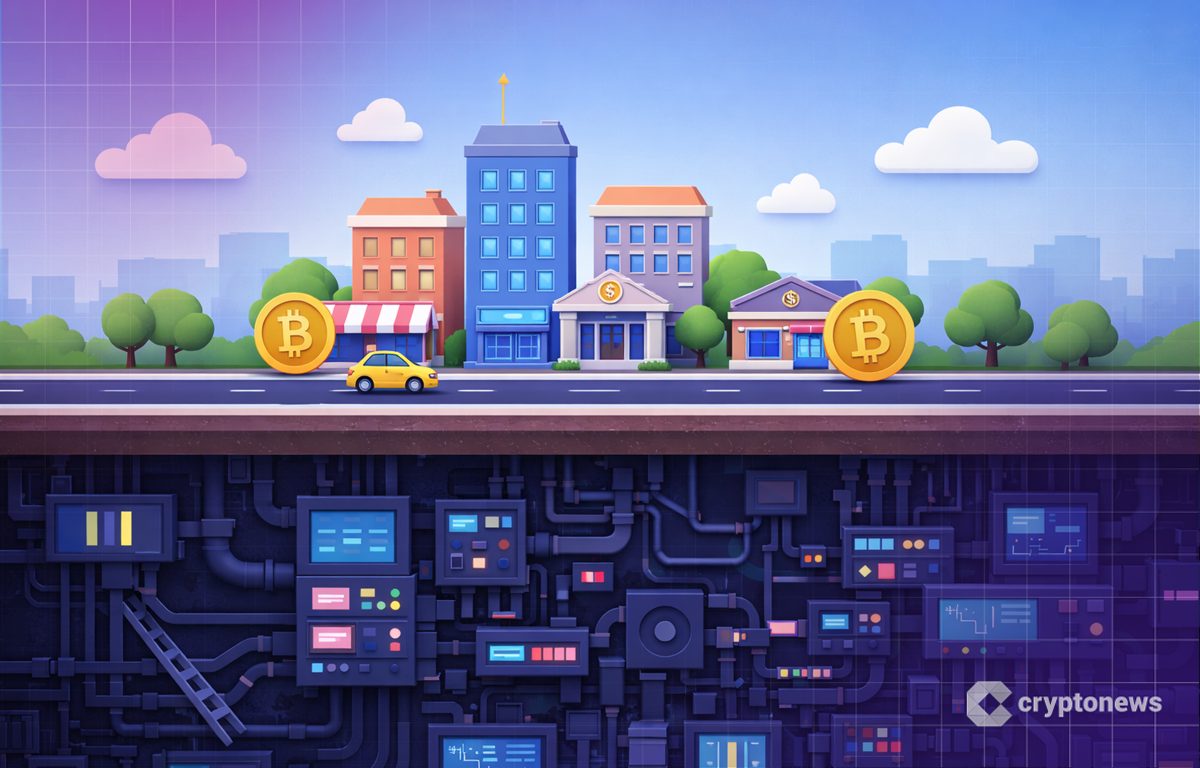
This is not about hype. It is not about onboarding slogans. It is about infrastructure that works when markets are down. Speculation fades. Verification remains. When verification works, no one notices. People get paid. They get access. They get approved. Or they do not.
The slope is over. The next phase is quieter. More practical. Less visible. More real. The internet moves forward when trust can be verified, trust can be built, and when actions can happen automatically.
Disclaimer: The views and opinions expressed in this article are those of the author and do not necessarily reflect the views of Cryptonews.com. This article is for informational purposes only and should not be construed as investment or financial advice.
The post Opinion: Verification Over Hype: Why Trust Is the Next Era of the Internet appeared first on Cryptonews.
