
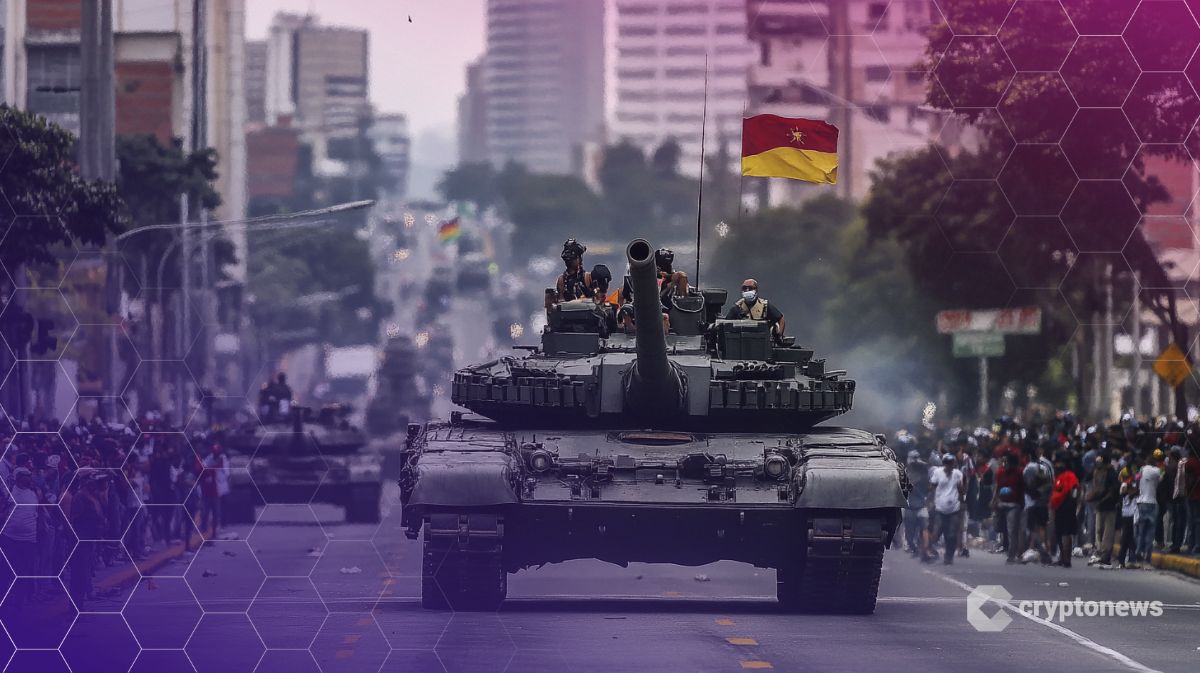
The online prediction platform Polymarket has ignited controversy after saying it will not settle millions of dollars’ worth of wagers tied to a potential Venezuela invasion by the United States, drawing sharp criticism from users and observers alike.
Key Takeaways:
Polymarket refused to settle Venezuela invasion bets, saying Maduro’s capture did not meet its invasion criteria.
More than $10.5 million was wagered before the ruling, leaving traders facing unexpected losses.
The dispute has renewed concerns over rule interpretation and fairness in prediction markets.
The decision comes in the wake of a dramatic military operation in which Venezuelan President Nicolás Maduro was captured, but which Polymarket says does not meet its criteria for an “invasion.”
$10.5M Bet on Venezuela Invasion Unravels After Polymarket Ruling
Before news of the raid broke, traders funneled more than $10.5 million into markets betting on whether the United States would undertake military action in Venezuela by specific dates, with the January 31, 2026 deadline being by far the most popular.
At least one anonymous trader appeared poised for a large payout, with positions on that contract worth nearly half a million dollars after the operation was announced.
However, Polymarket’s announcement that the event did not qualify under the terms of the wager sent odds tumbling and left many bettors without the returns they expected.
Polymarket published a clarification on its rules, noting that the contract in question specifically refers to “US military operations intended to establish control” over Venezuelan territory.
According to the company, a “snatch-and-extract” mission to capture Maduro, followed by diplomatic engagements, did not satisfy that standard.
The platform’s interpretation triggered frustration among traders, who accused Polymarket of changing the goalposts after the fact.
“That a military incursion, the kidnapping of a head of state, and the takeover of a country are not classified as an invasion is plainly absurd,” one user wrote.
The incident has spotlighted broader issues around prediction markets and event definition, especially as platforms like Polymarket blend elements of gambling, finance, and speculative politics.
Some critics have also pointed to the timing of large bets and questioned whether participants may have had access to non-public information about the operation, a topic that has drawn attention in both financial and political circles.
Prediction Markets Hit $13B in Record Activity
Web3 prediction markets have crossed $13 billion in cumulative trading volume, marking a record high even as broader crypto markets cool.
The surge has drawn in major players across tech and finance, including Fanatics, Coinbase, and MetaMask, all of which have recently launched or expanded event-trading platforms.
Against this backdrop, YZi Labs, the venture firm founded by Binance co-founder Changpeng “CZ” Zhao, has been intensifying its involvement in the sector.
YZi-backed Opinion has emerged as one of the most surprising breakout platforms. Launched on BNB Chain in October, it recorded nearly $1.5 billion in weekly trading volume within its first month, briefly overtaking established names such as Kalshi and Polymarket.
Meanwhile, prediction markets platform Kalshi has secured a major media breakthrough after signing a partnership with CNN, making the company the network’s official prediction markets partner while closing a $1 billion funding round at an $11 billion valuation.
The post Polymarket Withholds Payouts on Venezuela Invasion Bets, Sparking Backlash appeared first on Cryptonews.
