
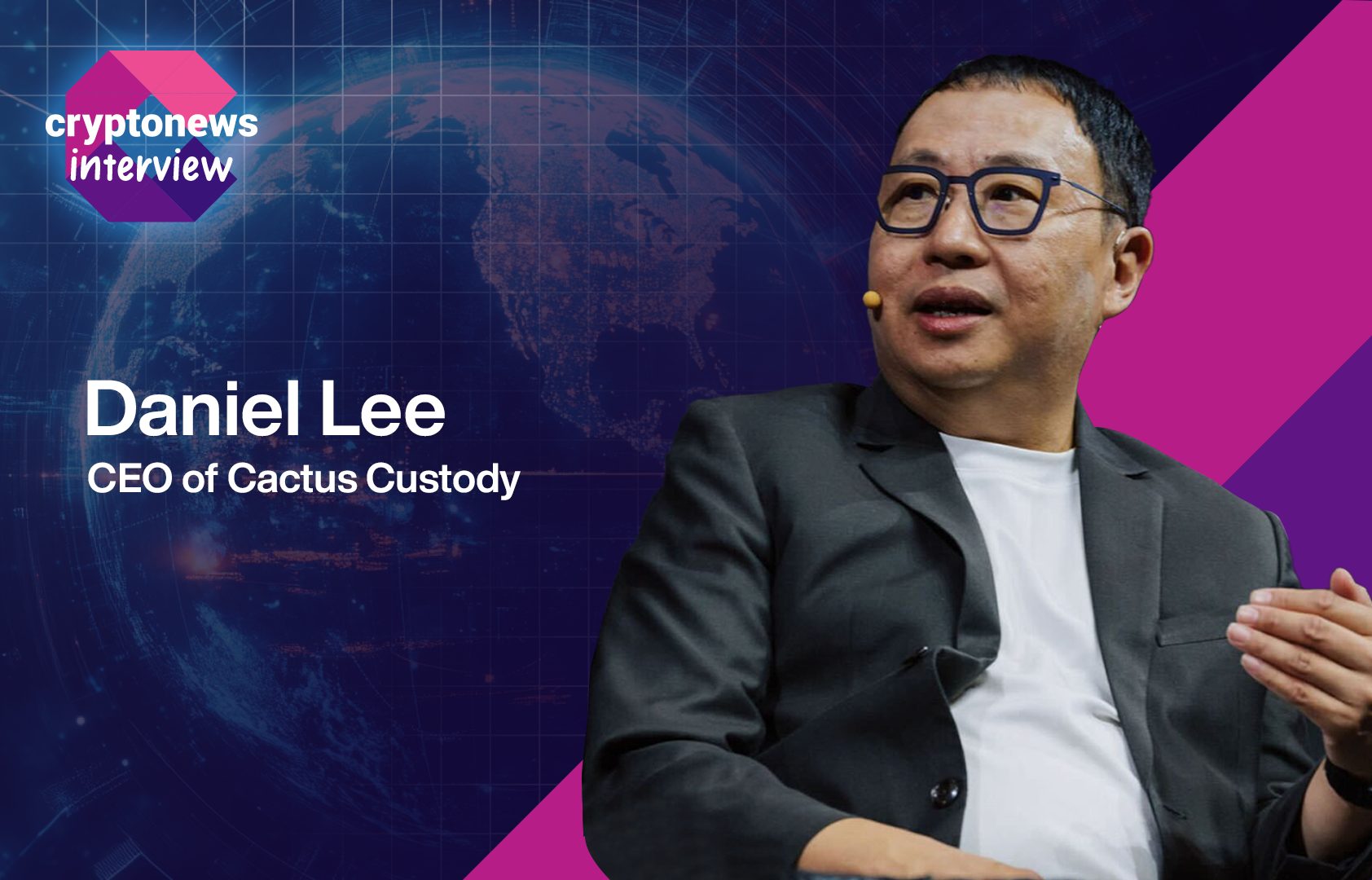
Daniel Lee, one of the most established names in institutional digital assets and former former Head of Web3 at Banking Circle, is entering a new leadership phase as CEO of Cactus Custody from January 2026, alongside advisory roles with Matrixport and Banking Circle.
In an exclusive interview with CryptoNews, Lee reflects on the rapid institutional maturity of digital assets, custody and tokenized financial instruments.
Lee’s journey into crypto did not begin with hype cycles or speculative mania. It began with a pragmatic observation: his clients were moving before the banks were. That realization would define the next decade of his career.
From Traditional Finance to Crypto-Native Strategy
Lee describes his transition as a natural — perhaps inevitable — progression. At Banking Circle, a regulated financial infrastructure provider servicing payments, FX, and treasury needs for institutions across Europe, Lee worked closely with asset managers, brokerages, and fintech firms who were experimenting with digital assets faster than expected.
“What I noticed was that institutional interest wasn’t theoretical — it was operational,” he said. Private wealth clients were asking about crypto allocation; hedge funds were engaging in high-frequency digital asset trading; pension funds and family offices wanted tokenized exposure.
“Traditional institutions have a responsibility to support emerging asset classes safely and transparently,” he said. “Banks and custodians are bridges — not blockers — between the old and new systems.”
His move to Cactus Custody aligns with that thesis. Built as the institutional infrastructure arm within Matrixport, Cactus Custody serves a global client base needing regulated storage, tokenized settlement services, and connectivity to exchanges, liquidity venues, and DeFi rails. As CEO, Lee will be tasked with scaling those capabilities while advising Matrixport on market expansion and institutional service design.
Cactus Custody is the institutional digital asset custody arm of Matrixport, the crypto-financial services company co-founded by industry veterans Jihan Wu and John Ge.
DBS Digital Exchange: The Pitch Nobody Expected in 2018
One of Lee’s defining chapters came during his time with DBS, Singapore’s largest bank, where he proposed something that, at the time, appeared out of place in a traditional financial boardroom: a crypto exchange owned by a bank. At DBS Digital Exchange he held the position of Executive Director and Head of Business and Listing.
The idea surfaced in 2018 — two years before institutional crypto became mainstream. “It wasn’t a quick yes,” Lee recalled. “There were concerns around regulation, risk, and brand perception. Crypto was still considered experimental.”
Lee recalls in 2018, long before digital assets earned institutional legitimacy, the odds of securing internal sponsorship at DBS were slim. Crypto was still viewed with suspicion, and he couldn’t simply schedule a meeting to pitch a proposal involving a digital asset exchange. So he adopted a different tactic.
“I waited in the lift lobby at Marina Bay Financial Centre for the head of capital markets Eng Seat Moey,” he says. When she arrived, he seized the moment — delivering his pitch from the ground floor to the 44th, an elevator ride that doubled as his only viable boardroom.
It was persistence, improvisation and timing — the kind of hustle that defined crypto’s early institutional era before it was fashionable, regulated or welcomed. “It took 18 months,” Lee said, “but the turning point came when we could objectively demonstrate client demand and regulatory clarity forming.”
DBS Digital Exchange would go on to launch, supporting tokenized deposits, digital bonds, and institutional-grade custody — becoming one of the first bank-backed digital asset exchanges globally.
“That experience taught me that innovation in regulated environments isn’t about speed — it’s about alignment,” he said. “When institutions adopt crypto, they bring stability, governance, and
Stablecoins, Tokenized Deposits, and the Next Wave of Adoption
Lee has been a consistent advocate for the role of stablecoins and tokenized deposits as the next chapter in the internet of value.
“Tokenization isn’t a buzzword — it solves real inefficiencies,” he explained. Whether enabling fractional ownership of private market assets, settling trades atomically without intermediaries, or providing transparency through programmable compliance, tokenization shifts the logic of the system.
For Lee, institutional adoption is not speculative capital — it is operational capability:
Private banks onboarding crypto wealth for clients
High-frequency and quantitative firms trading digital assets
Treasury desks exploring tokenized settlement faster than expected
Family offices pursuing alternative yield with on-chain controls
“Whether people look at tokenization from the lens of savings, settlement, or securities — the movement is the same,” he said. “Real-world assets on chain are not a trend, they are an infrastructure upgrade.”
Custody, Trust, and the Curve Ahead
As the digital asset sector matures, custody becomes more than vault storage — it becomes transaction orchestration, compliance automation and connectivity into tokenized ecosystems.
Lee sees traditional custodians and crypto-native custodians converging, not competing. “The question is no longer whether institutions will enter,” he said. “It’s about who they trust to support them when they do.”
His new dual role — leading Cactus Custody while advising Matrixport — positions him to influence that crossroads. “What we’re building now is not speculation infrastructure — it’s financial infrastructure,” Lee said. “The future of capital markets isn’t digital versus traditional; it’s digital plus traditional.”
The post Daniel Lee Named CEO of Cactus Custody as the Firm Expands Institutional Crypto Services appeared first on Cryptonews.
